Binding Xrefs On occasion, you will want to permanently attach an Xref to the host drawing. If you send your drawing files to a printing service to be plotted, including a set of Xref files can complicate things. Also, for archiving finished work, it’s better to reduce the number of files. There may also be occasions when the Xref has been revised for the last time and no longer needs to be a separate file. In all these situations, you will use the Bind command to convert an external reference into a block that will be stored permanently in the host drawing. Open the Xref Manager dialog box and highlight the Cabin12a Xref. Click the Bind button to open the Bind Xrefs dialog box. The two options in the Bind Type area have to do with how layers are treated when an Xref is bound to the host drawing. The default is Bind. It sets the Xref layers to be maintained as unique layers in the host drawing. With the Insert option, layers that have the same name in the two drawin...
10 reasons why PCs crash U must Know Fatal error: the system has become unstable or is busy," it says. "Enter to return to Windows or press Control-Alt-Delete to restart your computer. If you do this you will lose any unsaved information in all open applications." the E-Articles have many solutions and many articles about computer software. You have just been struck by the Blue Screen of Death. Anyone who uses Mcft Windows will be familiar with this. What can you do? More importantly, how can you prevent it happening? 1 Hardware conflict The number one reason why Windows crashes is hardware conflict. Each hardware device communicates to other devices through an interrupt request channel (IRQ). These are supposed to be unique for each device. For example, a printer usually connects internally on IRQ 7. The keyboard usually uses IRQ 1 and the floppy disk drive IRQ 6. Each device will try to hog a single IRQ for itself. If there are a lot of devices, or if they are not inst...
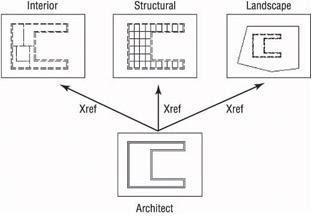
Applications for Xrefs There are many different uses for external references. I will describe two common applications to illustrate their range. Let’s suppose you are working on a project as an interior designer and a subcontractor to the lead architect. The architect can give you a drawing of a floor plan that is still undergoing changes. You load this file onto your hard disk, in a specially designated folder, and then Xref it into your drawing as a background— a drawing to be used as a reference to draw over. You can now proceed to lay out furniture, partitions, and so on, while the architect is still refining the floor plan. At an agreed-on time, the architect will give you a revised version of the floor plan. You will overwrite the one that you have on your computer with the latest version. You can then reload the Xref into your furniture layout drawing, and the newer version of the floor plan will now be the background. In this example, the lead architect might al...